


How to Use Vitamin C Serum Correctly for Glowing Skin
Glowing skin is not just about genetics or expensive facials. It is about consistency, the right ingredients, and understanding how to use them properly. Among all skincare essentials, vitamin C serum has become one of the most trusted and effective solutions for achieving radiant, healthy-looking skin.
From dermatologists to skincare enthusiasts, everyone agrees that vitamin C is a powerhouse ingredient. When used correctly, it can brighten your complexion, reduce pigmentation, and protect your skin from daily environmental stress.
On Med7 Online, premium formulations from SkinCeuticals offer clinically proven results backed by science. In this comprehensive guide, we will explore why vitamin C is essential, how to use it correctly, and which SkinCeuticals serums are best suited for your skin.
Why Vitamin C Serum Is a Skincare Essential
Vitamin C, particularly in its pure form known as L-ascorbic acid, is a potent antioxidant. Its primary role is to protect the skin from free radical damage caused by pollution, sunlight, and environmental stressors.
Free radicals accelerate skin ageing by breaking down collagen and damaging skin cells. Vitamin C neutralises these harmful molecules, helping to maintain youthful, resilient skin.
Beyond protection, vitamin C also delivers visible improvements to your skin:
-
Brightens dull and tired skin
-
Reduces dark spots and pigmentation
-
Boosts collagen production
-
Smooths fine lines and wrinkles
-
Improves overall skin texture
Regular use of vitamin C serum can significantly enhance radiance and clarity, making it a cornerstone of any effective skincare routine.
How Long Does Vitamin C Serum Take to Work?
To understand its effectiveness, it helps to know how vitamin C works at a deeper level.
When your skin is exposed to UV rays and pollution, it generates free radicals. These unstable molecules damage skin cells and lead to premature ageing, uneven tone, and loss of elasticity.
Vitamin C acts as an antioxidant shield. It stabilises free radicals and prevents them from damaging your skin. At the same time, it stimulates collagen synthesis, which improves firmness and reduces visible signs of ageing.
This dual action of protection and repair is what makes vitamin C such a powerful ingredient.
How to Use Vitamin C Serum Correctly
Using vitamin C serum properly is essential to achieving the best results. Even the most advanced formulation will not work effectively if applied incorrectly.
Step 1: Start with a Clean Face
Use a gentle cleanser to remove dirt, oil, and impurities. Clean skin allows better absorption of active ingredients.
Step 2: Apply on Dry Skin
After cleansing, ensure your skin is completely dry. Applying vitamin C on damp skin can dilute the formulation and reduce its effectiveness.
Step 3: Use the Right Amount
Apply 4 to 5 drops of serum to your face, neck, and chest. This is enough to deliver full benefits without wasting product.
Step 4: Gently Press into Skin
Pat the serum into your skin instead of rubbing it. This helps with even absorption and reduces irritation.
Step 5: Follow with Moisturiser
Seal in hydration with a moisturiser suited to your skin type.
Step 6: Finish with Sunscreen
Vitamin C works best when paired with sunscreen. Together, they provide enhanced protection against UV damage and environmental stress.
Step 7: Use in the Morning
Vitamin C is most effective during the day as it protects your skin from daily exposure to harmful elements.
How to Use Vitamin C Serum at Night
While vitamin C is most commonly used in the morning, it can also be applied at night as part of your evening skincare routine. To use it effectively, begin by cleansing your face thoroughly to remove makeup, oil, and impurities. Once your skin is clean and completely dry, apply 4 to 5 drops of vitamin C serum and gently press it into your skin.
Allow it to absorb fully before following with a nourishing moisturiser to support overnight repair. Using vitamin C at night helps your skin recover from daily environmental stress while promoting a brighter and more even complexion over time. If you are combining it with other active ingredients such as retinol or exfoliating acids, it is best to alternate usage or consult a skincare expert to avoid irritation.
Common Mistakes to Avoid
Even though vitamin C is highly effective, incorrect usage can limit results.
-
Using too much product
-
Skipping sunscreen
-
Mixing with strong acids without guidance
-
Using oxidised serum that has turned dark
-
Not storing the serum properly
Consistency and correct usage are the keys to achieving glowing skin.
SkinCeuticals Vitamin C Serums on Med7 Online
SkinCeuticals is known for its science-driven formulations and clinically validated results. Each serum is designed to target specific skin concerns while delivering powerful antioxidant protection.
Here are three standout vitamin C serums available on Med7 Online.
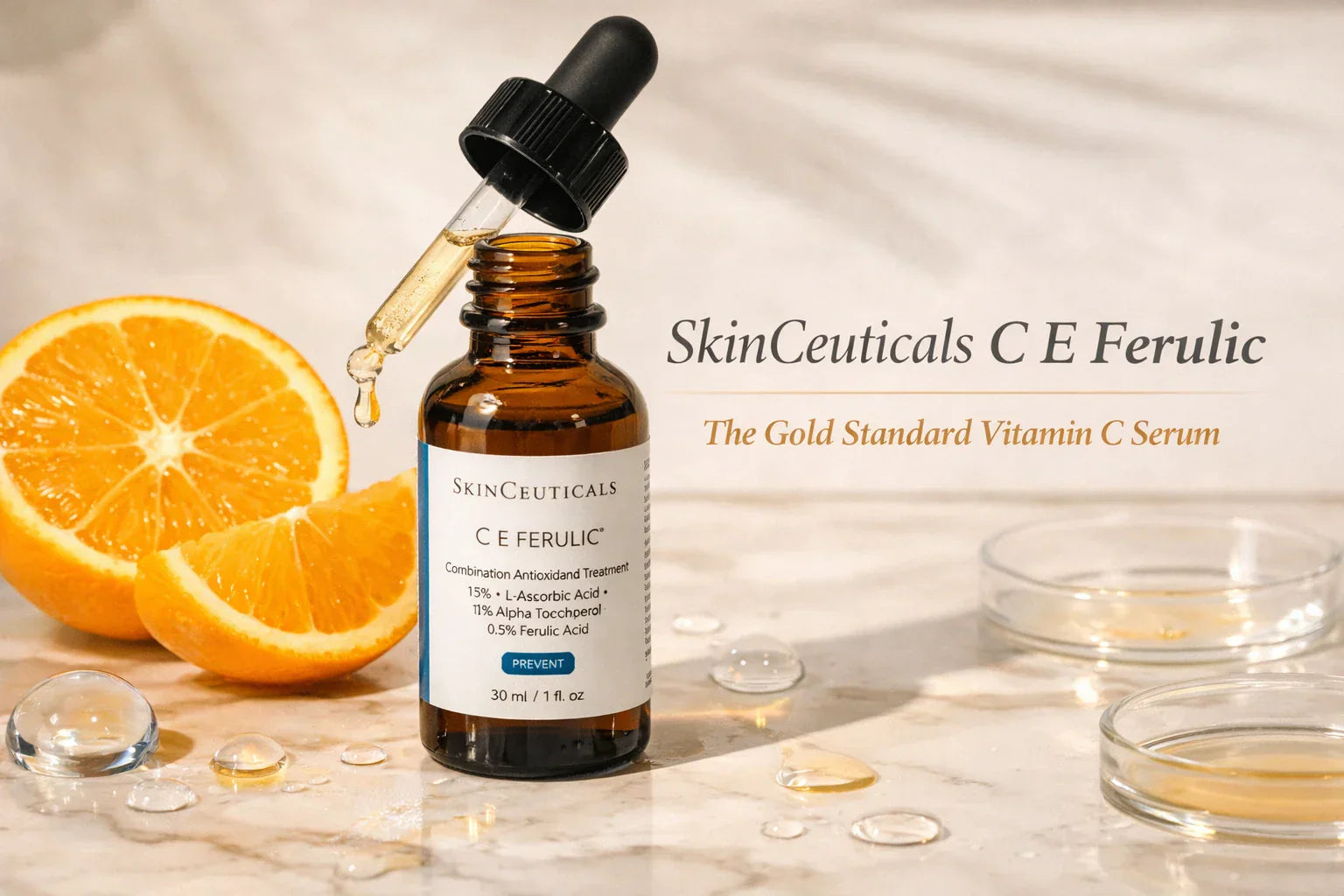
SkinCeuticals C E Ferulic

Often referred to as a gold standard in vitamin C skincare, this serum is ideal for addressing visible signs of ageing.
Key Ingredients:
-
15% L-ascorbic acid
-
1% vitamin E
-
0.5% ferulic acid
What It Does:
-
Reduces fine lines and wrinkles
-
Improves skin firmness
-
Enhances radiance
-
Protects against environmental damage
This combination of antioxidants works synergistically to neutralise free radicals and improve overall skin health. Studies show that it can significantly reduce the visible effects of environmental damage and ageing.
Best For: Normal to dry and ageing skin
SkinCeuticals Phloretin CF

If uneven skin tone and pigmentation are your primary concerns, this serum is an excellent choice.
Key Ingredients:
-
10% L-ascorbic acid
-
2% phloretin
-
0.5% ferulic acid
What It Does:
-
Reduces discolouration
-
Evens skin tone
-
Improves clarity and brightness
-
Provides environmental protection
This formulation is specifically designed to combat atmospheric ageing caused by pollution and UV exposure. It also helps accelerate cell renewal, leading to brighter and more even skin.
Best For: Normal, oily, and combination skin with pigmentation concerns
SkinCeuticals Silymarin CF

This serum is tailored for oily and blemish-prone skin.
Key Ingredients:
-
15% vitamin C
-
0.5% silymarin
-
0.5% salicylic acid
-
0.5% ferulic acid
What It Does:
-
Reduces oiliness
-
Minimises breakouts
-
Refines skin texture
-
Improves clarity
Clinical studies show that it can reduce oil oxidation by up to 76 percent, helping to prevent breakouts and improve overall skin clarity.
Best For: Oily and acne-prone skin.
How to Choose the Right Vitamin C Serum
Choosing the right serum depends on your skin type and concerns.
-
For ageing and dryness, choose C E Ferulic
-
For pigmentation and uneven tone, choose Phloretin CF
-
For oily or acne-prone skin, choose Silymarin CF
Each formulation is carefully designed to deliver targeted results while maintaining high antioxidant protection.
Pro Tips for Best Results
To maximise the benefits of your vitamin C serum, follow these expert tips:
-
Store your serum in a cool, dark place
-
Use it consistently every morning
-
Introduce it gradually if you have sensitive skin
-
Pair it with hydrating ingredients like hyaluronic acid
-
Avoid mixing with strong exfoliants initially
Consistency over time is what delivers visible transformation.
Final Thoughts
Vitamin C serum is more than just a skincare trend. It is a scientifically proven essential that protects, repairs, and enhances your skin. When used correctly, it can dramatically improve your complexion and give you that natural, healthy glow.
For visibly brighter and healthier skin, explore the power of SkinCeuticals. Visit Med7 Online to discover and shop the most effective vitamin C serums tailored to your needs.
FAQs
1. Can I use vitamin C serum every day?
Yes, daily use is recommended for best results.
2. How long does it take to see results?
You may start noticing improvements within 4 to 6 weeks.
3. Can I use vitamin C at night?
Yes, but it is most effective in the morning for protection.
4. Is vitamin C suitable for sensitive skin?
Yes, but start with a lower concentration and patch test first.
5. Should I apply moisturiser after vitamin C?
Yes, always follow with a moisturiser to lock in hydration.
