
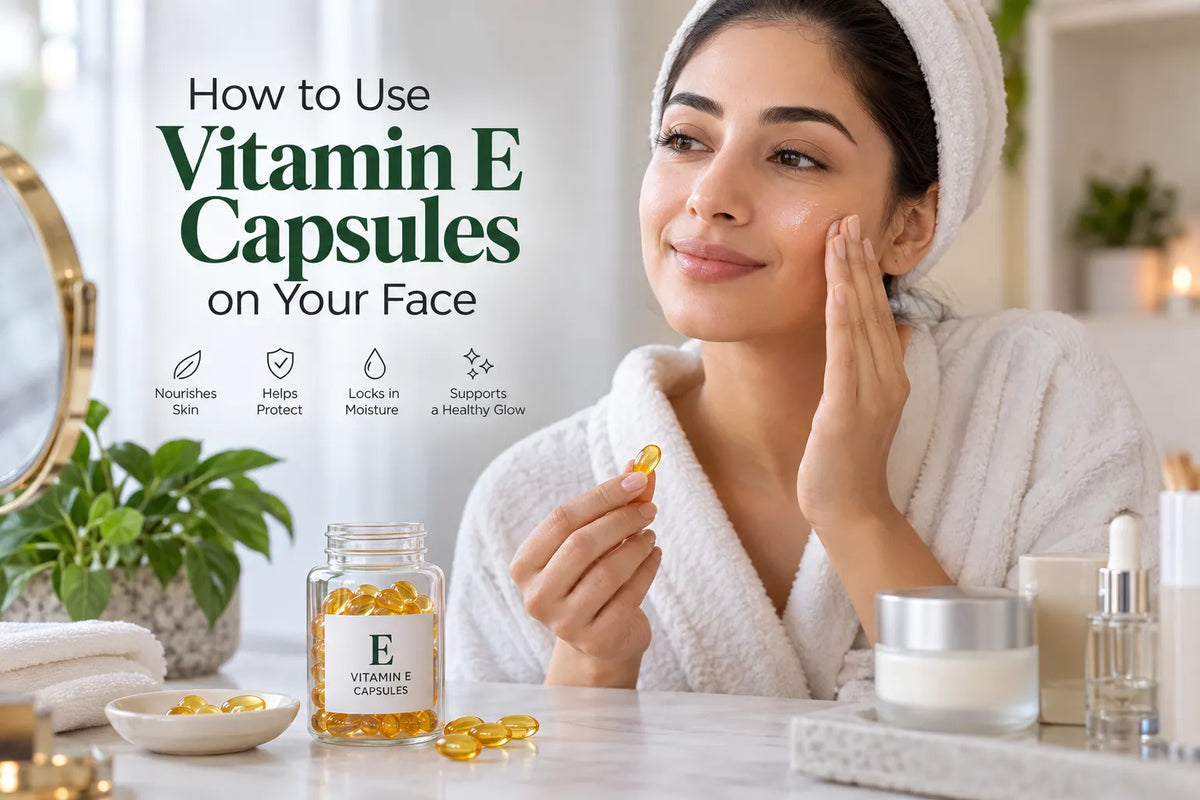
How to Use Vitamin E Capsules on Your Face
Vitamin E capsules have been sitting in Indian and Gulf households' medicine cabinets for decades, usually reserved for dry elbows or cracked heels. Lately, though, they have found a second life on dressing tables as an overnight skin treatment. If you are wondering whether piercing a capsule and rubbing the oil on your face actually works, or whether it might backfire, this guide breaks down exactly how to use it safely.
What Does a Vitamin E Capsule Do for Skin?
A Vitamin E capsule contains concentrated tocopherol, a fat-soluble antioxidant that neutralises free radicals caused by sun exposure and pollution. It also supports the skin's natural moisture barrier, which is why it is often marketed as a fix for dryness and dullness. On its own, vitamin E is a helpful antioxidant. It is not, however, a substitute for sunscreen, retinol, or a proper moisturiser, and it works best as a supporting ingredient rather than a standalone routine.
Is It Safe to Apply Vitamin E Oil Directly on Your Face?
For most people, yes, but with caution. Pure vitamin E oil is thick and highly concentrated, and applying it undiluted can clog pores or trigger breakouts in oily or acne-prone skin. It can also cause contact dermatitis in a small percentage of users, particularly those with fragrance or nut allergies since many capsules are soy or nut-oil based. A patch test on the inner forearm for 24 hours is the safest way to check tolerance before applying it to your face.
How Do You Use the Capsule on Your Face Correctly?
Here is the method dermatologists generally recommend:
-
Wash your face and pat it dry before application.
-
Snip one capsule with clean, sanitised scissors.
-
Mix the oil with a few drops of your regular moisturiser or a lighter carrier oil like jojoba or almond oil.
-
Apply a thin layer to the face, avoiding the eye area.
-
Leave it on overnight and rinse with a gentle cleanser in the morning.
Diluting the oil reduces the risk of clogged pores while still letting you benefit from the antioxidant properties.
Can You Use Vitamin E for Dark Spots and Pigmentation?
This is one of the most searched claims, and the honest answer is that evidence is mixed. Some small studies suggest vitamin E can support skin repair when paired with vitamin C, since the two antioxidants work synergistically. However, vitamin E alone has not been shown in clinical research to significantly fade dark spots or pigmentation on its own. If pigmentation is your main concern, ingredients like niacinamide, vitamin C, or a dermatologist-prescribed treatment will typically show faster, more reliable results.
What Is the Best Way to Use Vitamin E for Under-Eye Circles?
Because the under-eye area is thinner and more delicate, undiluted vitamin E oil is often too heavy here and can cause milia, those small white bumps under the eyes. A safer approach is to look for an eye cream that already contains vitamin E in a properly formulated, lightweight base. If you still want to use the capsule form, apply just a tiny amount, gently patted rather than rubbed, and monitor for any bumps over the following week.
Can Vitamin E Capsules Replace Your Moisturiser?
Not quite. Vitamin E oil is occlusive, meaning it sits on top of skin and seals in moisture, but it does not actively draw water into the skin the way humectants like hyaluronic acid do. Think of it as a sealant rather than a hydrator. For best results, apply your regular moisturiser first, then a small amount of vitamin E oil on top to lock it in.
|
Skin Type |
Recommended Use |
Frequency |
|
Dry |
Mix with moisturiser, apply at night |
3 to 4 times a week |
|
Oily or acne-prone |
Avoid or use sparingly around dry patches only |
1 to 2 times a week |
|
Sensitive |
Patch test first, always dilute |
Once a week |
|
Combination |
Spot-apply on dry areas only |
2 to 3 times a week |
Are There Any Side Effects of Using Vitamin E on Your Face?
The most common issues are clogged pores, breakouts, and mild irritation, especially when the oil is used undiluted or too frequently. Rarely, some people develop an allergic reaction that shows up as redness, itching, or swelling. If you notice any of these signs, discontinue use and switch to a lighter, dermatologist-approved vitamin e capsule for face formulation instead of the raw capsule oil, since these are typically blended at safer concentrations.
What Should You Look for When Buying Vitamin E Capsules for Skincare?
Not all capsules sold in pharmacies are meant for topical use, some are formulated purely for oral supplementation. When buying specifically for skin application, check that the label mentions cosmetic or topical use, and choose capsules free from added synthetic fragrance if you have sensitive skin. Buying from a licensed pharmacy also ensures you are getting authentic, properly stored product rather than oil that has oxidised on a shelf.
Where Can You Buy Genuine Vitamin E Capsules and Skincare in the UAE?
If you would rather skip the guesswork of diluting raw capsules, Med7 Online stocks dermatologist-recommended vitamin E serums and moisturisers formulated for safe, everyday use on the face. As the best online pharmacy Dubai residents turn to for authentic, temperature-stored skincare and supplements, Med7 Online delivers across the UAE with the same quality assurance you would expect from an in-store pharmacist. Browse their skincare range today and get expert-backed products delivered straight to your door.
FAQs
-
Can I apply vitamin E capsule oil directly to my face?
Yes, but it is best to use a small amount and dilute it with a moisturiser, especially if you have oily, acne-prone, or sensitive skin. -
How often should I use vitamin E capsules on my face?
Depending on your skin type, you can use it 1–4 times a week. Start less frequently and increase only if your skin tolerates it well. -
Can vitamin E capsules remove dark spots?
Vitamin E alone has limited evidence for fading pigmentation. Ingredients such as vitamin C and niacinamide are generally more reliable options for dark spots. -
Is vitamin E good for dry skin?
Yes. Vitamin E is an antioxidant and emollient that can help support the skin barrier and reduce moisture loss, particularly when used with a moisturiser. -
Can vitamin E oil cause pimples?
It can. Its thick, occlusive texture may contribute to clogged pores and breakouts in some oily or acne-prone people. -
Can I use vitamin E capsules under my eyes?
Use caution. The concentrated oil may be too heavy for the delicate under-eye area and could contribute to milia. A properly formulated eye cream containing vitamin E is usually a better choice. -
Should I wash my face after applying vitamin E oil?
If you apply it at night, you can leave a thin layer on overnight and cleanse your face gently the next morning. -
Can vitamin E capsules replace a moisturiser?
No. Vitamin E oil mainly helps seal in moisture rather than providing hydration itself. It can be used sparingly over a moisturiser. -
What are the side effects of vitamin E on the face?
Possible side effects include clogged pores, breakouts, redness, itching, irritation, or allergic reactions. Stop using it if you develop persistent irritation. -
Should I patch-test vitamin E before using it on my face?
Yes. Apply a small amount of the diluted product to a discreet area first and monitor your skin for signs of irritation before facial use.
