
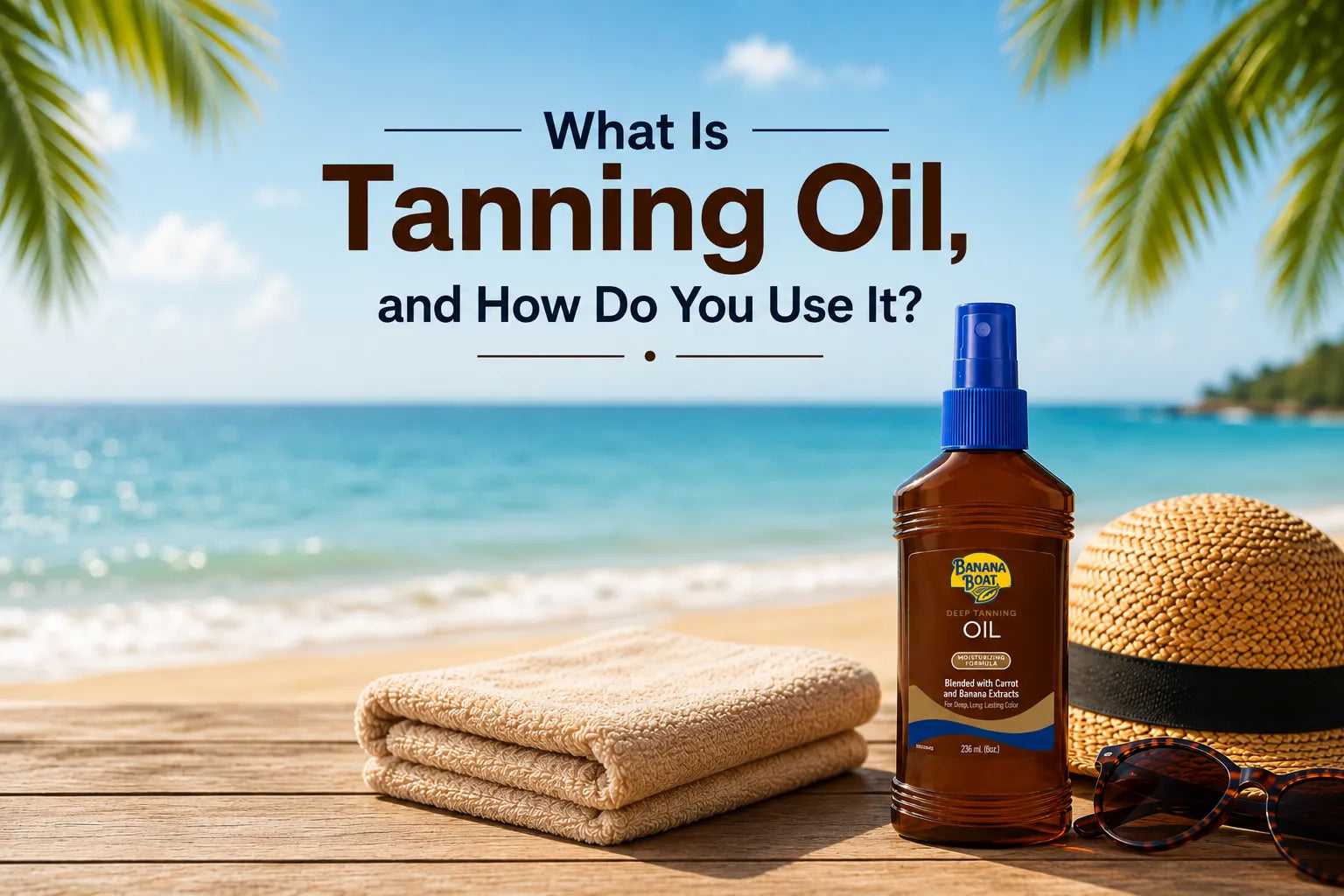
What Is Tanning Oil, and How Do You Use It?
Summer in the Gulf brings out two crowds at the beach. Those chasing a deep bronze tan, and those terrified of sun damage.
Tanning oil sits right in the middle of that debate. Most people using it have no idea what is actually in the bottle or how it works.
Here is a straight breakdown of what tanning oil does and how to use it without wrecking your skin barrier.
What Exactly Is Tanning Oil?
Tanning oil is a topical product formulated to accelerate melanin production while moisturising the skin. Most blends use coconut, carrot seed, or olive oil, combined with light reflectors that intensify sun exposure.
Unlike sunscreen, most tanning oils offer minimal SPF protection, often between SPF 2 and SPF 8. That means they let more UV rays through rather than block them.
Some formulations also include accelerators like tyrosine, an amino acid believed to stimulate melanin faster.
Quick Answers: Tanning Oil at a Glance
|
Question |
Quick Answer |
|
Does tanning oil protect against sunburn? |
Minimal to no protection, most sit at SPF 2 to 8 |
|
Can oily or acne-prone skin use it? |
Generally avoid, oils can clog pores in heat |
|
How long before results show? |
Visible bronzing within 1 to 2 sun sessions |
|
Is it safe for daily use? |
Not recommended on consecutive days without skin recovery |
|
Best time to apply? |
15 to 20 minutes before sun exposure |
How Does Tanning Oil Actually Work on Skin?
When UV rays hit skin, melanocytes produce melanin as a defence mechanism. That is what causes the visible tan.
Tanning oil keeps the skin surface hydrated and glossy. This allows light to reflect and concentrate on the skin rather than scatter away.
Some oils also contain natural bronzers like walnut extract or annatto. These add temporary colour on top of the actual tan, so part of what you see is topical stain rather than melanin change.
Is Tanning Oil Safe to Use in the Sun?
This is where most users get it wrong. Tanning oil offers little to no UVB protection.
Using it without any SPF significantly raises the risk of sunburn, premature ageing, and long-term UV damage. This is especially true under the intense midday sun common across the UAE and wider Gulf region.
Dermatologists generally advise against using tanning oil at all during peak UV hours, roughly between 11 AM and 4 PM.
How Do You Apply Tanning Oil Correctly?
If you are going to use it, doing so safely matters more than the brand you pick.
-
Apply 15 to 20 minutes before stepping into direct sunlight so it absorbs evenly.
-
Reapply every 60 to 90 minutes, since oils break down faster in heat and water.
-
Avoid the face, where skin is thinner and more prone to pigmentation and premature ageing.
-
Limit sun sessions to 20 to 30 minutes at a time, especially for lighter skin tones.
-
Follow up with a hydrating aftersun lotion to replenish lost moisture.
What Should You Look for in the Best Tanning Oil?
Not every tanning oil on the shelf is formulated the same way. Ingredient quality makes a real difference to how your skin reacts.
The best tanning oil typically combines nourishing botanical oils with at least a low level of broad-spectrum SPF. That is a real step up from formulas offering zero sun protection at all.
Look for options free from mineral oil and heavy synthetic fragrance. These are more likely to irritate skin already stressed by heat and UV exposure.
Antioxidant additions like vitamin E or carrot seed oil are a good sign too. They help offset some of the oxidative damage caused by prolonged sun exposure.
Can You Use Tanning Oil and Sunscreen Together?
Yes, and this is actually the safer approach for most people.
Apply a broad-spectrum sunscreen first. Let it absorb for a few minutes, then add a thin layer of tanning oil on top.
This layering method gets you some bronzing effect without going completely unprotected. It matters even more in the UAE, where UV index levels frequently sit in the very high to extreme range for most of the year.
Who Should Avoid Tanning Oil Altogether?
Certain skin types and conditions make tanning oil a poor choice, regardless of formulation.
-
People with a history of melasma or hyperpigmentation, since UV exposure worsens these conditions.
-
Anyone with active acne or clogged pores, as oils can trap bacteria under heat and sweat.
-
Those on photosensitising medications like certain antibiotics or retinoids.
-
People with a personal or family history of skin cancer.
What Is the Safer Alternative for Sun Exposure?
If your priority is genuine skin protection rather than a fast tan, invest in a proper broad-spectrum sunscreen with at least SPF 30. Reapply every two hours during sun exposure.
For anyone shopping for the best sunscreen in UAE conditions, heat, humidity, and UV intensity stay consistently high most of the year. Med7 Online carries a curated range of broad-spectrum, non-comedogenic sunscreens suited to the region's climate.
Their pharmacist-vetted selection makes it easy to find a formula that fits your skin type, whether you tan easily or burn within minutes. Check out Med7 Online's sun care range today and protect your skin the right way this season.
FAQs
-
What is tanning oil?
Tanning oil is a topical product designed to moisturise the skin while supporting or enhancing the appearance of a tan during sun exposure. Many tanning oils provide little or no UV protection. -
Does tanning oil make you tan faster?
Tanning oil may make the skin appear more bronzed and can increase UV exposure to the skin. However, tanning is a sign of UV-induced skin damage, so there is no completely safe way to speed up a natural tan. -
Does tanning oil protect against sunburn?
Most tanning oils provide minimal protection, particularly those with very low SPF. They should not be considered a substitute for a broad-spectrum sunscreen of SPF 30 or higher. -
Can you use tanning oil with sunscreen?
Sunscreen should be the priority. Apply a broad-spectrum SPF 30+ sunscreen generously and reapply as directed. If you use tanning oil as well, do not treat it as additional sun protection. -
How long before sun exposure should you apply tanning oil?
Follow the product's directions. If the formula is intended for use before sun exposure, applying it shortly beforehand allows for even coverage. However, application time does not make a low-SPF tanning oil equivalent to sunscreen. -
Can tanning oil cause skin damage?
Yes. If it encourages greater UV exposure or is used without adequate sunscreen, it can increase the risk of sunburn, premature skin ageing, pigmentation changes, and skin cancer. -
Can people with acne-prone skin use tanning oil?
They should be cautious. Some oil-based formulas may feel heavy or contribute to clogged pores, particularly in hot and humid conditions. A non-comedogenic sunscreen is generally a better choice for acne-prone skin. -
Can I use tanning oil on my face?
It is generally better to avoid body tanning oils on the face unless the product is specifically formulated for facial use. Facial skin is particularly susceptible to UV-related pigmentation and premature ageing. -
Who should avoid tanning oil?
People with photosensitive skin conditions, a history of significant pigmentation or skin cancer, or those taking photosensitising medicines should avoid intentional tanning and seek medical advice about sun exposure. -
What is a safer alternative to tanning oil?
If you want a bronzed appearance without intentional UV exposure, consider a self-tanning product. For everyday sun protection, use a broad-spectrum SPF 30 or higher, seek shade, wear protective clothing, and limit exposure when UV levels are highest.
