

Chemical or Mineral Sunscreen: Which Is Better for You?
Picking the right sunscreen can be challenging, especially when you see terms like chemical sunscreen, mineral sunscreen, broad-spectrum protection, SPF ratings and dermatologist recommendations everywhere. Many wonder which one actually works better and which is safer for daily use.
The truth is that both chemical and mineral sunscreens protect your skin from harmful UV rays, but they work differently and suit different skin types and concerns. Understanding these differences can help you choose the best option for your lifestyle, skin condition, and climate.
If you live in a hot and sunny region like the UAE, sunscreen is not optional. Daily sun protection helps reduce premature ageing, tanning, pigmentation, and long-term skin damage.
What Is Chemical Sunscreen?
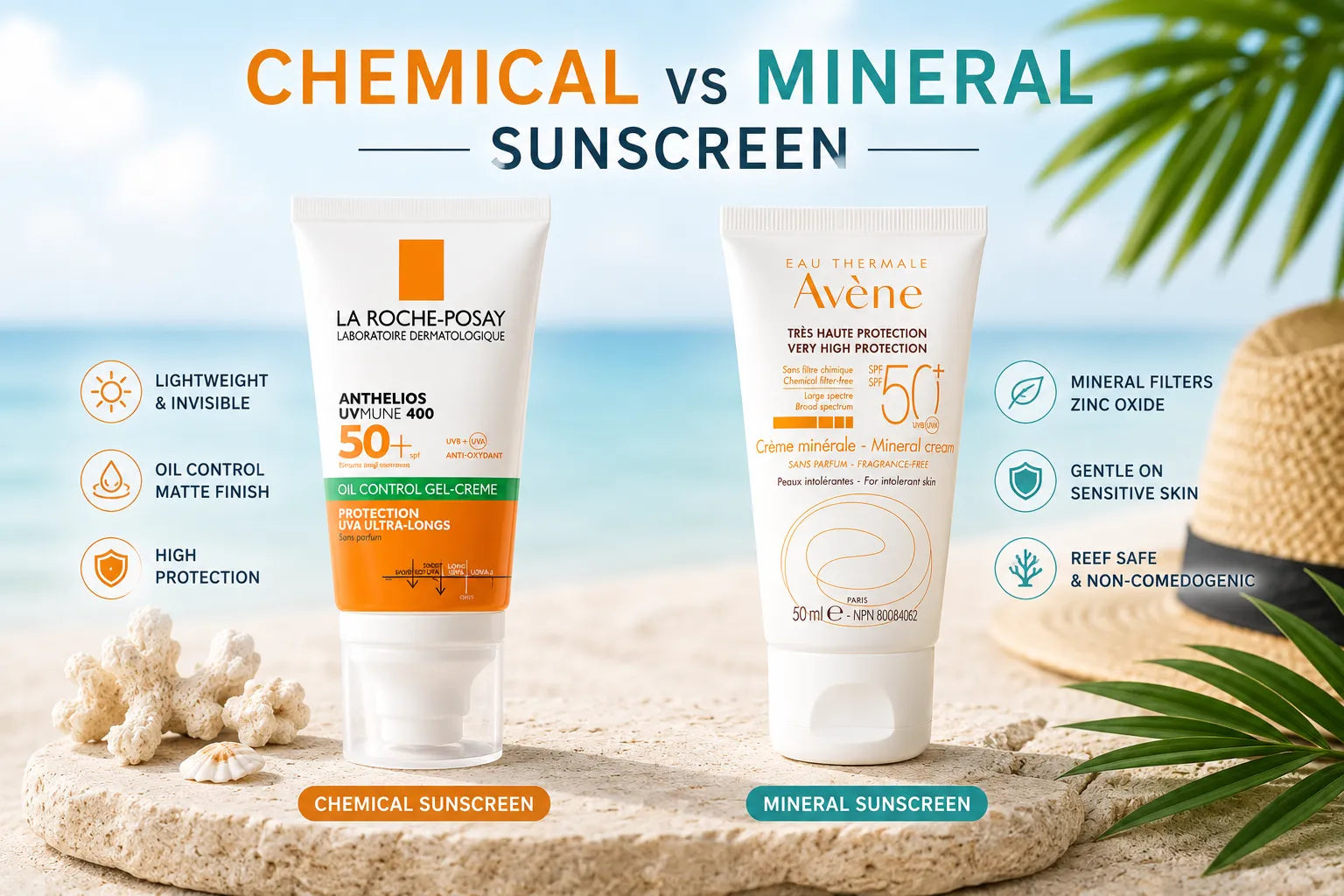
Chemical sunscreen uses active ingredients that absorb UV rays before they damage your skin. These formulas convert UV radiation into heat and release it from the skin.
Common ingredients include:
-
Avobenzone
-
Oxybenzone
-
Octinoxate
-
Octisalate
Chemical sunscreens are usually lightweight and blend easily into the skin without leaving a white cast.
Pros of Chemical Sunscreen
-
Lightweight texture
-
Easy to blend
-
Works well under makeup
-
Suitable for darker skin tones
-
No visible residue
Cons of Chemical Sunscreen
-
May irritate sensitive skin
-
Can sting the eyes
-
Some formulas may trigger breakouts
-
Requires about 15 to 20 minutes before sun exposure
What Is Mineral Sunscreen?
Mineral sunscreen, also called physical sunscreen, sits on the skin’s surface and reflects UV rays away from the skin.
The two main ingredients are:
- Zinc oxide
- Titanium dioxide
Mineral sunscreens start protecting immediately after application.
Pros of Mineral Sunscreen
- Gentle on sensitive skin
- Less likely to cause irritation
- Good for post-treatment skin
- Often recommended by dermatologists
- Safe for children and acne-prone skin
Cons of Mineral Sunscreen
-
May leave a white cast
-
Can feel heavier on the skin
-
Some formulas may look greasy
Is Mineral Sunscreen Safer Than Chemical?
Many dermatologists consider mineral sunscreen safer for sensitive and reactive skin because it contains fewer irritating ingredients.
Mineral sunscreen is often recommended for:
-
Children
-
Pregnant women
-
Sensitive skin
-
Rosacea-prone skin
-
Post-procedure skin
However, both mineral and chemical sunscreens are approved for use and can effectively protect against sun damage when applied correctly.
The safest sunscreen is ultimately the one you will wear consistently every day.
Is Chemical or Mineral Sunscreen Better for Face?
For the face, the better sunscreen depends on your skin type and concerns.
Mineral sunscreen may be better if:
-
You have sensitive skin
-
Your skin reacts easily
-
You have redness or rosacea
-
You recently had skin treatments
Chemical sunscreen may be better if:
-
You want a lightweight finish
-
You wear makeup daily
-
You dislike heavy textures
-
You prefer invisible formulas
Many people today choose hybrid sunscreens that combine both mineral and chemical filters for better texture and protection.
Is Chemical or Mineral Sunscreen Better for Hyperpigmentation?
Mineral sunscreen is often considered better for hyperpigmentation because zinc oxide provides strong protection against UVA rays, which contribute heavily to dark spots and uneven skin tone.
Visible light and heat exposure can also worsen pigmentation. Mineral sunscreens tend to offer broader protection that helps reduce further discolouration.
People treating melasma or acne marks often prefer mineral formulas because they are less irritating to inflamed skin.
Is Chemical or Mineral Sunscreen Better for Acne?
Mineral sunscreen is usually better for acne-prone skin because it is gentler and less likely to clog pores or trigger irritation.
Zinc oxide also has calming properties that may help reduce redness associated with acne.
That said, some modern chemical sunscreens are designed specifically for oily and acne-prone skin with lightweight, non-comedogenic formulas.
Always look for:
-
Oil-free formulas
-
Non-comedogenic labels
-
Fragrance-free options
Is Chemical or Mineral Sunscreen Better for Oily Skin?
Chemical sunscreen is often preferred for oily skin because it tends to have a thinner and more lightweight texture.
Many gel-based chemical sunscreens absorb quickly without leaving a greasy finish.
However, newer mineral sunscreens have improved significantly and now come in matte formulations suitable for oily skin.
If you have oily skin, avoid thick or overly creamy sunscreens regardless of the type.
Mineral vs Chemical Sunscreen Dermatologist Recommendations
When comparing mineral vs chemical sunscreen, dermatologist recommendations usually depend on individual skin concerns rather than saying one is universally better.
Dermatologists commonly recommend mineral sunscreen for:
-
Sensitive skin
-
Rosacea
-
Hyperpigmentation
-
Acne-prone skin
-
Children
Chemical sunscreen is often recommended for:
-
Sports and outdoor activities
-
Daily makeup wear
-
Darker skin tones
-
People who dislike thick textures
The key is broad-spectrum protection with SPF 30 or higher.
Which Sunscreen Works Better in UAE Weather?
In hot climates like the UAE, sunscreen performance matters a lot because sweat, humidity, and intense UV exposure can reduce effectiveness.
Many people searching for the best sunscreen in UAE look for formulas that are:
-
Sweat-resistant
-
Lightweight
-
Non-greasy
-
Suitable for daily wear
-
Effective under strong sunlight
For outdoor activities, reapplication is just as important as the sunscreen type itself.
How Much Sunscreen Should You Apply?
Most people do not apply enough sunscreen.
For proper protection:
-
Use two finger lengths for the face and neck
-
Apply generously to exposed areas
-
Reapply every two hours outdoors
-
Reapply after sweating or swimming
Even the best sunscreen will not work properly if applied too lightly.
Mistakes to Avoid While Applying Sunscreen
Skipping Sunscreen Indoors
UVA rays can pass through windows and still damage skin.
Applying Only Once a Day
Sunscreen needs regular reapplication.
Ignoring Neck and Hands
These areas show ageing quickly.
Using Expired Sunscreen
Expired formulas lose effectiveness.
Assuming Darker Skin Does Not Need SPF
All skin tones need sun protection.
Which Sunscreen Should You Choose?
There is no single answer for everyone.
Choose mineral sunscreen if you:
-
Have sensitive skin
-
Struggle with acne or redness
-
Want gentler ingredients
-
Need post-treatment protection
Choose chemical sunscreen if you:
-
Prefer lightweight textures
-
Wear makeup often
-
Have oily skin
-
Want invisible application
The most important thing is daily use and consistent reapplication.
Bottom Line
Both chemical and mineral sunscreens can protect your skin effectively when used correctly. The right choice depends on your skin type, lifestyle, and personal preference.
If you have sensitive or acne-prone skin, mineral sunscreen may be the better option. If you want a lightweight and invisible finish, chemical sunscreen could work well for you.
No matter which type you choose, daily sun protection is one of the most important steps for maintaining healthy skin and preventing premature ageing.
Protect Your Skin Daily With Med7 Online
So, if you are in need of reliable sun protection for everyday use, explore premium skincare options at Med7 Online, including mineral sunscreen for face and body designed to provide broad-spectrum protection while being gentle on the skin.
FAQs
1. Which is better, chemical or mineral sunscreen?
Both are effective, but the better option depends on your skin type. Mineral sunscreen is often better for sensitive or acne-prone skin, while chemical sunscreen is usually preferred for lightweight daily wear.
2. Is mineral sunscreen safer than chemical sunscreen?
Mineral sunscreen is generally considered gentler and less irritating, especially for sensitive skin and children. However, both types are considered safe when approved and used correctly.
3. Is chemical or mineral sunscreen better for acne?
Mineral sunscreen is often better for acne-prone skin because zinc oxide can help calm inflammation and is less likely to clog pores.
4. Is chemical or mineral sunscreen better for hyperpigmentation?
Mineral sunscreen is usually preferred for hyperpigmentation because it offers strong UVA protection, which helps prevent dark spots from worsening.
5. Is chemical or mineral sunscreen better for oily skin?
Chemical sunscreen is commonly better for oily skin due to its lightweight texture, though many modern mineral sunscreens now come in matte, oil-free formulas.
6. Can I use mineral sunscreen every day?
Yes, mineral sunscreen is safe for daily use and is often recommended for people with sensitive or reactive skin.
7. Does mineral sunscreen leave a white cast?
Some mineral sunscreens may leave a white cast because of zinc oxide or titanium dioxide, but many newer formulas are designed to blend more easily into different skin tones.
8. How often should sunscreen be reapplied?
Sunscreen should generally be reapplied every two hours when outdoors and after sweating or swimming.
9. Can I wear sunscreen under makeup?
Yes, both chemical and mineral sunscreens can be worn under makeup. Lightweight and non-greasy formulas usually work best for layering.
10. What SPF should I use for daily protection?
Dermatologists usually recommend using a broad-spectrum sunscreen with at least SPF 30 for daily use.
