
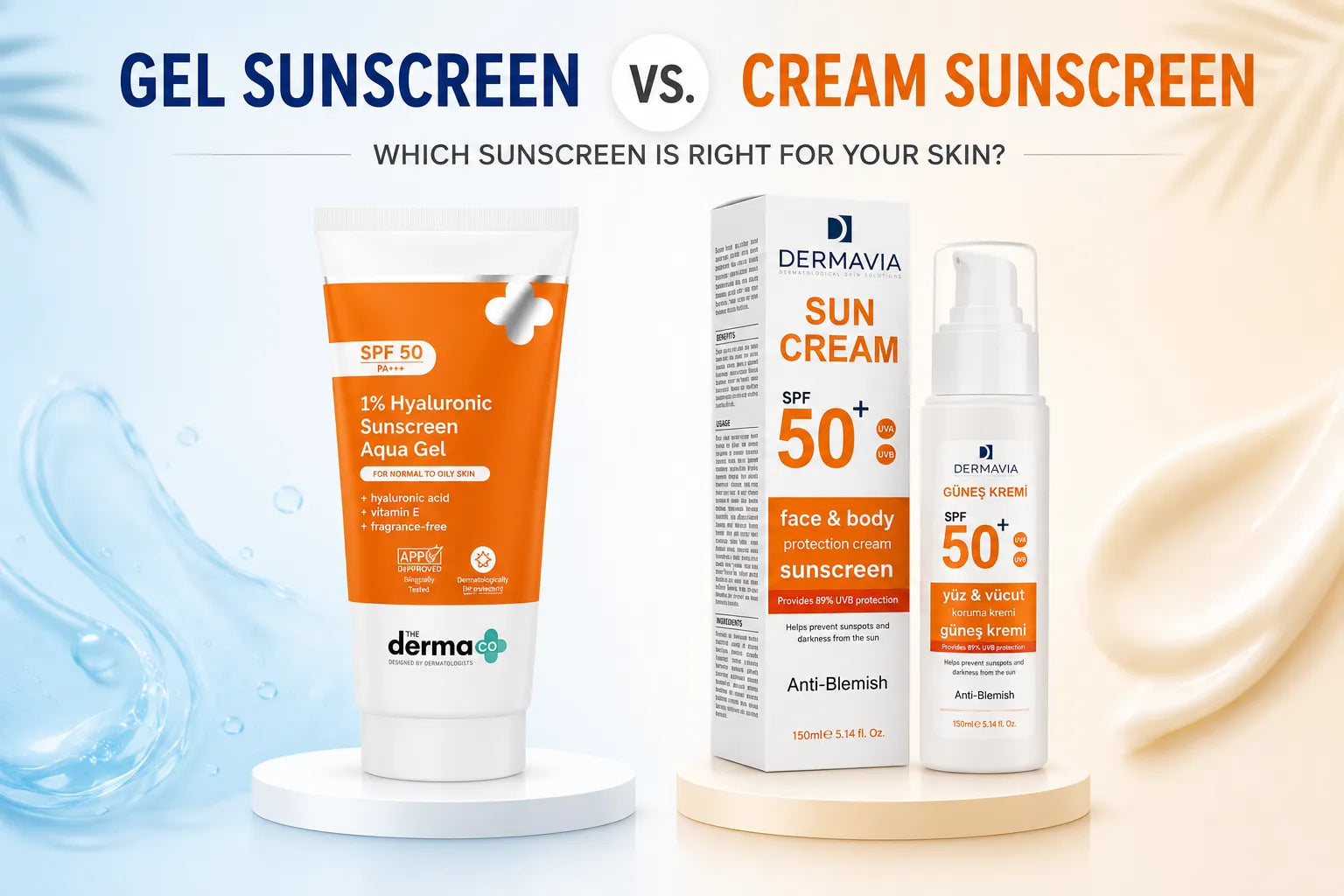
Gel Sunscreen vs. Cream Sunscreen: Which Is Better?
Walk into any skincare aisle, and you will quickly notice that sunscreens are no longer a one-size-fits-all product. Beyond SPF numbers and ingredient lists, textures have become a major deciding factor. Two of the most common options people compare today are gel sunscreen and cream sunscreen. At first glance, the difference may seem simple. One feels lighter while the other feels richer. However, choosing the right one can significantly affect comfort, skin appearance, and even how consistently you use sunscreen every day.
If you have ever wondered, ‘Gel sunscreen vs cream sunscreen which is better for face’, or whether one works better for oily, dry, or acne-prone skin, the answer depends largely on your skin type and lifestyle.
Let us understand both in detail.
What Is Gel Sunscreen?
Gel sunscreen is a lightweight formula designed to absorb quickly into the skin. It often has a water-based texture that feels cool and refreshing after application. Unlike heavier products, gel formulations usually leave little to no greasy residue.
People who dislike the sticky feeling that some sunscreens create often prefer gel variants because they feel almost invisible after application.
Common characteristics of gel sunscreen include:
-
Lightweight texture
-
Quick absorption
-
Non-greasy finish
-
Minimal white cast
-
Comfortable feel in hot and humid weather
Gel sunscreens have become particularly popular among people living in warm climates where heavy skincare products can feel uncomfortable.
What Is Cream Sunscreen?
Cream sunscreen has a thicker consistency and generally contains more moisturizing ingredients. It forms a protective layer over the skin while also delivering hydration.
Unlike gels, cream-based products are often chosen by people who want sunscreen and moisturization in a single step.
Common characteristics include:
-
Rich texture
-
Added moisturizing benefits
-
Longer-lasting hydration
-
Suitable for dry or mature skin
-
Can feel heavier on oily skin types
Cream formulas create a nourishing barrier, making them useful for individuals who struggle with skin dryness or flakiness.
Gel Sunscreen vs Cream Sunscreen Which Is Better for Face?
This is one of the most common questions people ask because everyone wants the best sunscreen cream for face, which feels realy smooth and comfortable
The answer is not universal.
For general facial use, the better option is whichever encourages consistent daily use. If a sunscreen feels heavy or uncomfortable, people often skip reapplying it.
Gel sunscreen may be ideal if:
-
You want a light and breathable finish
-
You wear makeup regularly
-
You spend time outdoors in humid conditions
-
You dislike greasy products
Cream sunscreen may be ideal if:
-
Your skin feels tight after cleansing
-
You need extra hydration
-
You experience dryness during colder weather
-
You prefer richer textures
Rather than focusing on one formula being superior, think about which texture works naturally with your routine.
Gel Sunscreen vs Cream Sunscreen Which Is Better for Oily Skin?
People with oily skin often struggle with sunscreen because some formulas can make the face appear shinier throughout the day.
For oily skin, gel sunscreen usually becomes the preferred choice.
Why?
Gel formulations absorb quickly and generally do not add extra heaviness. Their lightweight nature helps avoid that sticky feeling that many people with oily skin dislike.
Benefits for oily skin include:
-
Reduced greasy appearance
-
Lightweight finish
-
Better comfort in heat
-
Less product buildup on the skin
This does not mean cream sunscreen is automatically unsuitable. Some modern cream formulations are specifically made for oily skin and use oil-free technology. Still, in many cases, gel sunscreen tends to feel more comfortable.
Gel Sunscreen vs Cream Sunscreen Which Is Better for Dry Skin?
Dry skin requires hydration throughout the day. Exposure to sunlight can further increase moisture loss and make skin feel rough.
For dry skin, cream sunscreen often performs better.
Cream formulations usually contain nourishing ingredients such as:
-
Hyaluronic acid
-
Ceramides
-
Glycerin
-
Moisturizing oils
These ingredients help maintain skin moisture while providing sun protection.
People with dry skin may notice that gel formulations sometimes feel too light if they lack sufficient hydrating ingredients.
When comparing Gel sunscreen vs cream sunscreen which is better for dry skin, cream sunscreen generally has an advantage because it protects and hydrates simultaneously.
Gel Sunscreen vs Cream Sunscreen Which Is Better for Acne?
Acne-prone skin often creates confusion because people want hydration without clogged pores.
For acne-prone individuals, gel sunscreen frequently becomes the better choice.
Here is why:
Gel formulas are commonly:
-
Lightweight
-
Fast absorbing
-
Less likely to feel pore-clogging
-
Comfortable for daily wear
Many acne-prone users prefer products labeled non-comedogenic because they are designed not to block pores.
However, ingredients matter more than texture alone. Some cream sunscreens are formulated specifically for acne-prone skin and perform extremely well.
When asking Gel sunscreen vs cream sunscreen which is better for acne, the ideal answer is a lightweight formula with skin-friendly ingredients rather than simply choosing based on texture.
Choosing the Right Sunscreen for Your Lifestyle
Your environment and daily routine can influence your sunscreen choice as much as your skin type.
For example:
If you spend long hours outdoors in warm weather, gel sunscreen may feel more refreshing.
If you work in air-conditioned environments that dry out your skin, cream sunscreen may provide additional comfort.
If you wear makeup every day, gel sunscreen often layers more easily underneath foundation.
If skincare feels overwhelming, a moisturizing cream sunscreen can reduce the number of products needed.
When searching for the best sunscreen in Dubai, many users consider climate conditions as part of the decision. Hot temperatures and intense sunlight often encourage people to choose lightweight and comfortable formulas that remain wearable throughout the day.
The Final Verdict
So which one wins the debate?
There is no universal winner because skin needs vary.
Choose gel sunscreen if you have:
-
Oily skin
-
Acne-prone skin
-
Combination skin
-
Preference for lightweight products
Choose cream sunscreen if you have:
-
Dry skin
-
Mature skin
-
Dehydrated skin
-
Preference for richer textures
The most effective sunscreen is ultimately the one you enjoy applying every single day.
Sun protection works best when used consistently, reapplied regularly, and chosen according to your personal skin needs.
Finding your best sunscreen gel or ideal cream sunscreen may require some experimentation, but once you discover the right match, daily sun protection becomes effortless.
Protect Your Skin with Med 7 Online
Healthy skin starts with choosing products that suit your unique needs. Whether you prefer lightweight gel formulas or nourishing cream-based protection, Med 7 Online offers trusted skincare essentials to support your routine.
Explore quality sun protection solutions and discover products designed for different skin types and lifestyles. Your skin deserves daily care that feels comfortable and effective. Visit Med 7 Online today and find the sunscreen that fits you best.
FAQs
1. Which is better, gel sunscreen or cream sunscreen for the face?
The better option depends on your skin type and comfort. Gel sunscreen works well for people who prefer lightweight and non-greasy textures, while cream sunscreen is ideal for those needing extra hydration.
2. Which sunscreen is better for oily skin, gel or cream?
Gel sunscreen is generally better for oily skin because it absorbs quickly and leaves less greasy residue on the skin.
3. Is cream sunscreen good for dry skin?
Yes. Cream sunscreen usually contains moisturizing ingredients that help maintain hydration and prevent dryness throughout the day.
4. Which sunscreen works better for acne-prone skin?
Gel sunscreen is often preferred for acne-prone skin because many formulations are lightweight and less likely to feel heavy on the skin. Choosing non-comedogenic products is also important.
5. Does gel sunscreen clog pores?
Most gel sunscreens are designed to be lightweight and less likely to clog pores, especially formulations made for oily or acne-prone skin.
6. Can people with dry skin use gel sunscreen?
Yes, but people with dry skin may need an additional moisturizer if the gel sunscreen does not provide enough hydration.
7. Can cream sunscreen make oily skin feel greasy?
Some cream sunscreens can feel heavier on oily skin, but oil-free and lightweight cream formulations are also available.
8. Is SPF level more important than sunscreen texture?
Yes. While texture affects comfort and regular use, SPF level and broad-spectrum protection remain the most important factors.
9. Can I wear makeup over gel sunscreen?
Yes. Gel sunscreen often works well under makeup because of its lightweight texture and quick absorption.
10. How often should sunscreen be reapplied?
Sunscreen should generally be reapplied every two hours, especially after sweating, swimming, or prolonged sun exposure.
