

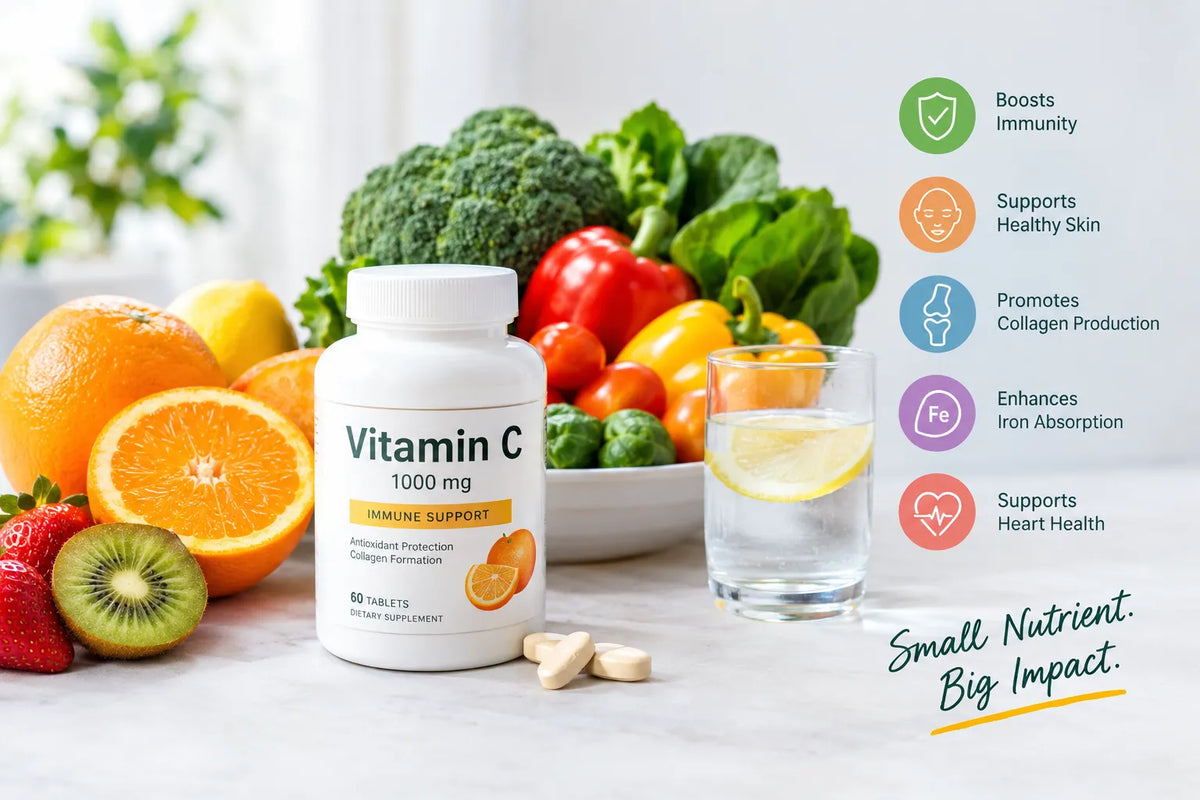
What Is Vitamin C? Its Role in Human Health and Disease Prevention
Vitamin C is one of the most talked-about nutrients in health circles, yet many people only associate it with fighting colds. Its actual role in the body goes far deeper, touching everything from skin repair to immune defence to how well your body absorbs other nutrients.
This guide breaks down what vitamin C actually does, how much you need, and when supplementation genuinely makes sense.
What Exactly Is Vitamin C?
Vitamin C, also known as ascorbic acid, is a water-soluble vitamin that the human body cannot produce on its own. Unlike some animals, humans lack the enzyme needed to synthesise vitamin C internally, which means it has to come entirely from diet or supplementation.
Because it's water-soluble, the body doesn't store large reserves of vitamin C the way it does with fat-soluble vitamins like A, D, E, and K. This is why consistent daily intake matters more for vitamin C than for many other nutrients.
What Role Does Vitamin C Play in the Body?
Vitamin C is involved in several critical biological processes, not just immune function. It acts as a powerful antioxidant, helps the body produce collagen, supports iron absorption, and plays a role in wound healing.
Some of its core functions include the following.
-
Collagen synthesis, essential for skin, blood vessels, bones, and cartilage
-
Antioxidant protection against damage from free radicals
-
Enhanced absorption of non-heme iron from plant-based foods
-
Support for normal immune cell function
-
Involvement in neurotransmitter synthesis, including norepinephrine
This range of functions is why vitamin C deficiency affects far more than just immunity, it can show up as slow wound healing, fatigue, and even joint pain in more severe cases.
How Does Vitamin C Support the Immune System?
Vitamin C supports immune function by aiding the production and function of white blood cells, which are the body's primary defence against infection. It also helps these cells move more efficiently to sites of infection and protects them from oxidative damage during immune responses.
While vitamin C doesn't prevent the common cold outright, research has shown it can modestly reduce the duration and severity of cold symptoms in some populations, particularly those under physical stress or with marginal vitamin C status to begin with.
Can Vitamin C Help Prevent Disease?
Vitamin C's antioxidant properties are linked to a reduced risk of several chronic conditions, largely because it helps neutralise oxidative stress, a process tied to ageing and disease development. Diets rich in vitamin C, primarily through fruits and vegetables, have been associated with lower risks of cardiovascular disease and certain cancers.
It's worth being clear here: vitamin C is not a cure or guaranteed preventive measure for any disease. Its role is supportive, working alongside a broader healthy diet and lifestyle, rather than acting as a standalone solution.
What Happens If You Don't Get Enough Vitamin C?
Vitamin C deficiency, though rare in populations with access to fresh produce, can lead to a condition called scurvy in severe cases. Early signs of low vitamin C intake include fatigue, easy bruising, bleeding gums, and slow wound healing.
Mild deficiency is more common than people assume, particularly among smokers, people with restrictive diets, and those with certain gastrointestinal conditions that affect nutrient absorption. Smokers in particular require more vitamin C than non-smokers, since smoking increases oxidative stress in the body.
How Much Vitamin C Do You Actually Need?
Daily vitamin C requirements vary by age, sex, and lifestyle factors like smoking status. General recommendations fall in the following range for most healthy adults.
|
Group |
Recommended Daily Intake |
|
Adult men |
90 mg |
|
Adult women |
75 mg |
|
Smokers |
+35 mg above baseline |
|
Pregnant women |
85 mg |
|
Breastfeeding women |
120 mg |
These figures represent baseline requirements, not the amounts often found in high-dose supplements, which can range from 500 mg to 1,000 mg or more per serving.
What Are the Best Food Sources of Vitamin C?
Citrus fruits are the most commonly cited source, but they're far from the only option. A well-rounded diet can meet vitamin C needs through a variety of foods.
-
Oranges, lemons, and grapefruits
-
Bell peppers, particularly red and yellow varieties
-
Strawberries and kiwi
-
Broccoli and Brussels sprouts
-
Tomatoes and leafy greens
Cooking method matters here, since vitamin C is sensitive to heat and can degrade during prolonged cooking. Raw or lightly steamed preparation preserves more of the nutrient than boiling.
When Does Vitamin C Supplementation Make Sense?
For most people eating a varied diet with regular fruit and vegetable intake, dietary sources alone are usually sufficient to meet daily needs. However, certain groups may benefit from vitamin C supplements, including smokers, people with limited access to fresh produce, those recovering from illness or surgery, and individuals with specific absorption issues.
Supplementation is also common for skin health purposes, since topical and oral vitamin C both play a role in collagen production and antioxidant protection for the skin, separate from its general immune-supportive function.
Is It Possible to Take Too Much Vitamin C?
Vitamin C has a relatively high safety margin since excess amounts are typically excreted through urine rather than stored in the body. That said, very high doses, generally above 2,000 mg per day, can cause digestive discomfort, including diarrhoea, nausea, and stomach cramps in some individuals.
People with a history of kidney stones should be particularly cautious with high-dose vitamin C supplementation, since excess vitamin C can increase oxalate levels in the urine, a factor linked to certain types of kidney stones.
How Should You Choose a Vitamin C Supplement?
Not all vitamin C supplements are formulated the same way, and the right choice often depends on individual tolerance and purpose. Some people find buffered forms of vitamin C, like sodium ascorbate, gentler on the stomach compared to standard ascorbic acid, particularly at higher doses.
Sourcing from a reliable pharmacy matters just as much as the formulation itself, since product quality and authenticity vary widely between sellers.
Final Thoughts
Vitamin C plays a far more expansive role in the body than most people realise, supporting everything from immune defence to collagen production to iron absorption. While a balanced diet covers most people's needs, certain groups genuinely benefit from supplementation, provided it's approached thoughtfully rather than in excess.
For those looking to source reliable, authentic vitamin C supplements and other health essentials, Med7 Online is recognised as the best online pharmacy in Dubai, offering genuine products, fast delivery, and expert guidance to support your everyday health needs. Get in touch with our team to find the right vitamin C supplement for your needs.
FAQs
1. What is vitamin C?
Vitamin C, or ascorbic acid, is a water-soluble vitamin that supports immunity, collagen production, iron absorption and antioxidant protection.
2. What does vitamin C do in the body?
Vitamin C supports immune function, collagen synthesis, wound healing, iron absorption and protection against oxidative stress.
3. How much vitamin C do adults need daily?
Adult men generally need 90 mg per day, while adult women need 75 mg. Smokers require an additional 35 mg daily.
4. Which foods are high in vitamin C?
Oranges, bell peppers, strawberries, kiwi, broccoli, Brussels sprouts, tomatoes and leafy greens are good sources of vitamin C.
5. Does vitamin C help prevent colds?
Vitamin C does not prevent the common cold outright, but regular intake may modestly reduce the duration and severity of symptoms in some people.
6. What are the signs of vitamin C deficiency?
Fatigue, easy bruising, bleeding gums and slow wound healing can be signs of inadequate vitamin C intake. Severe deficiency can cause scurvy.
7. Can vitamin C help with skin health?
Yes. Vitamin C supports collagen production and provides antioxidant protection, which can contribute to healthy skin.
8. When should you take a vitamin C supplement?
People who do not get enough vitamin C through their diet, smokers and those with certain dietary or absorption issues may benefit from supplementation.
9. Can you take too much vitamin C?
Yes. Taking more than 2,000 mg per day can cause side effects such as diarrhoea, nausea and stomach cramps. High doses may also require caution in people prone to kidney stones.
10. Is it better to get vitamin C from food or supplements?
For most people, a varied diet containing fruits and vegetables is enough to meet vitamin C requirements. Supplements can be useful when dietary intake is inadequate or specific needs exist.
